


Implant-retained dentures
A denture,
anchored down.
If your denture moves, clicks or rubs, a few implants can hold it firmly in place. It still comes out to clean, but it no longer wanders while you wear it.
-
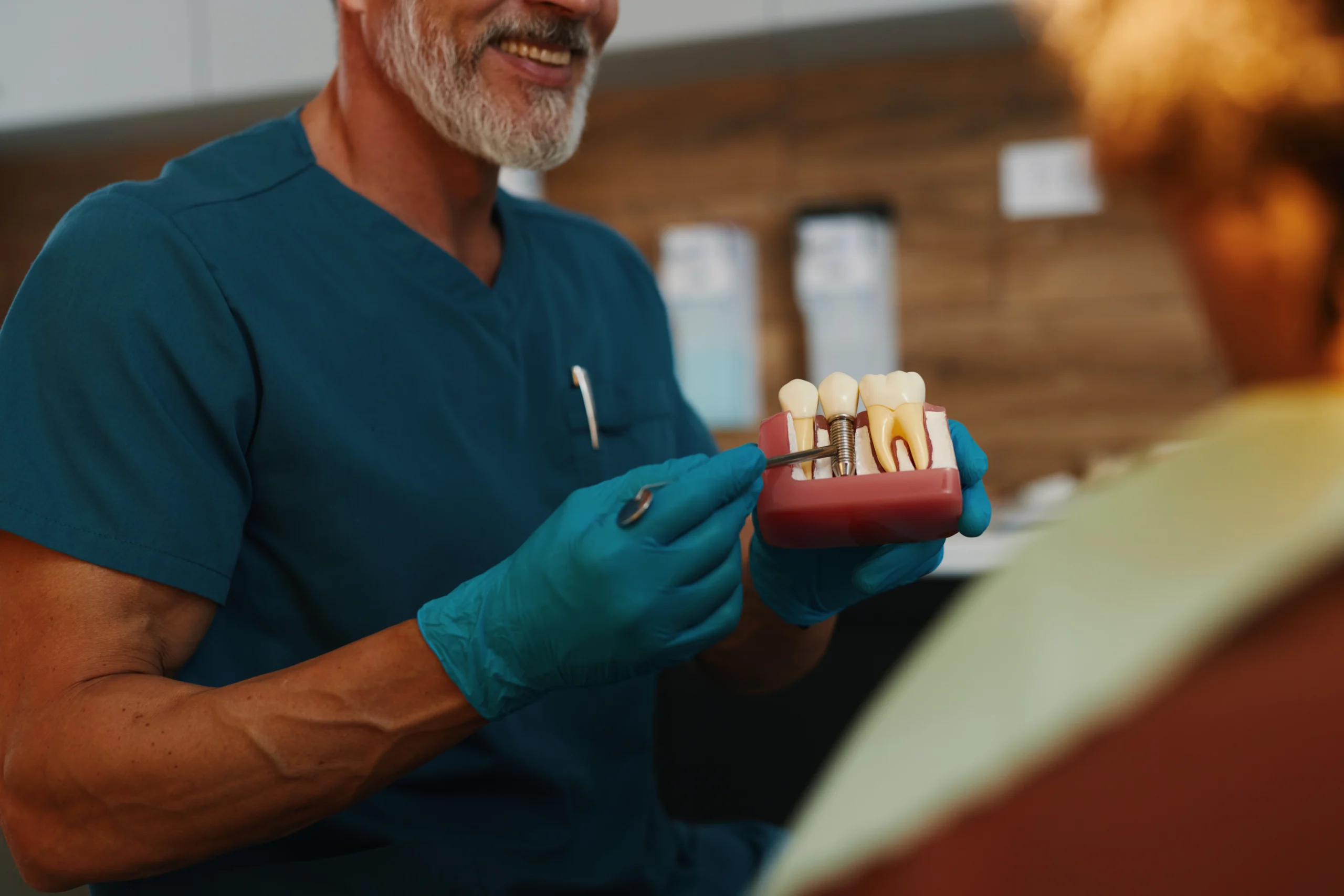
A denture that clips onto implants, usually two to four, so it is held securely rather than resting on the gums alone.
-
A removable solution, still. You take it out to clean, but it stays firmly put while you wear it.
-
A big upgrade from a normal denture, no more slipping, no messy adhesives, and far more confidence eating.
A middle path: more secure than a normal denture, less involved than a fully fixed arch.
A loose lower denture — the most common reason
An upper denture — held without covering the palate
Sore gums — from a denture that rubs
Adhesive fatigue — done with messy fixatives

Why it matters
A denture you
can forget about.
The difference a few implants make is hard to overstate. A denture that once ruled out certain foods and needed watching becomes something you barely think about.

Secure, and easy to live with.
It does not move
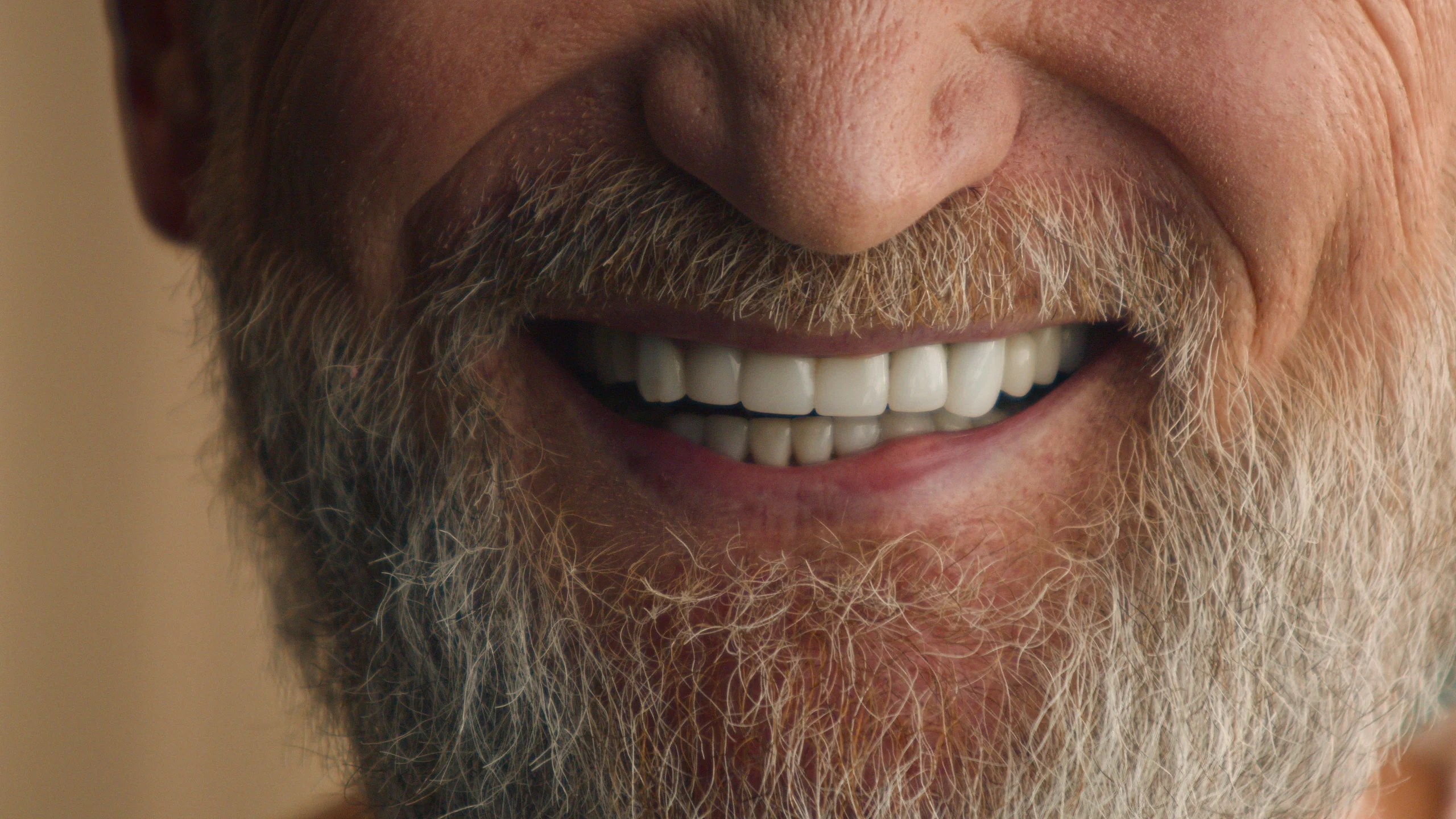
Clipped onto implants, the denture stays exactly where it should. No slipping mid-meal, no clicking mid-sentence, no sudden shifts when you laugh.
Eat what you like
With a firm hold, foods that a loose denture made awkward, apples, steak, crusty bread, are back on the menu. You bite with real confidence again.
No more adhesives
The implants do the holding, so there is no need for messy pastes or powders. You simply clip it in each morning and get on with your day.
Kinder on your gums and jaw
A loose denture rubs sore spots and speeds up bone loss. Implants take the pressure off the gums and help preserve the bone underneath.
How it works
How implant dentures work.
From first scan to a secure denture, here is the journey.
We plan and assess
We check your gums, jaw and any existing denture, and scan to plan where the implants will go, usually two to four to hold the denture firmly.
We place the implants
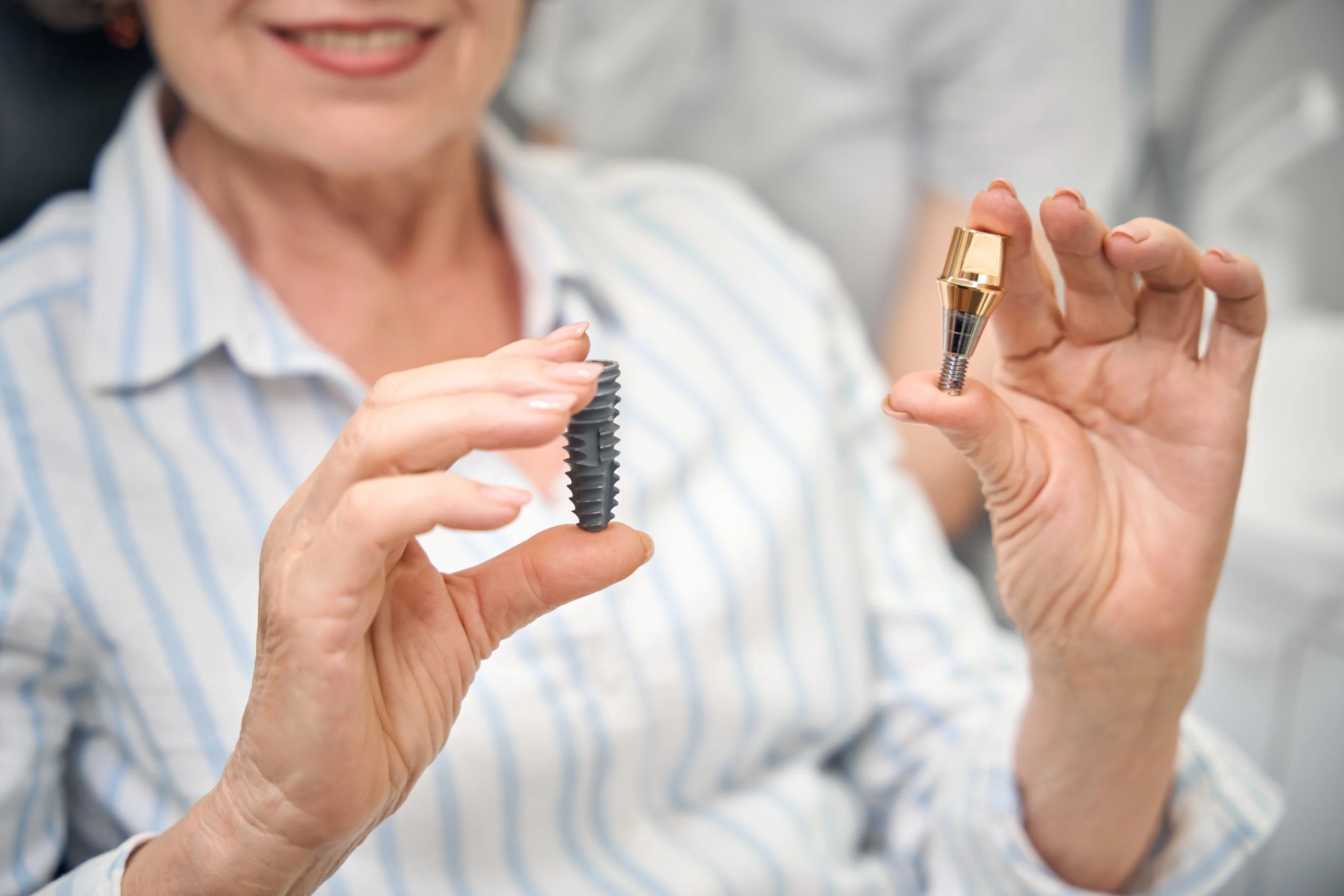
We place the small number of implants needed under local anaesthetic. It is a straightforward procedure, and sedation is available if you would prefer.
It heals, you wear a denture
The implants are left to fuse with the bone over a few months. In the meantime you are not left without teeth, we make sure of that.
We fit your new denture
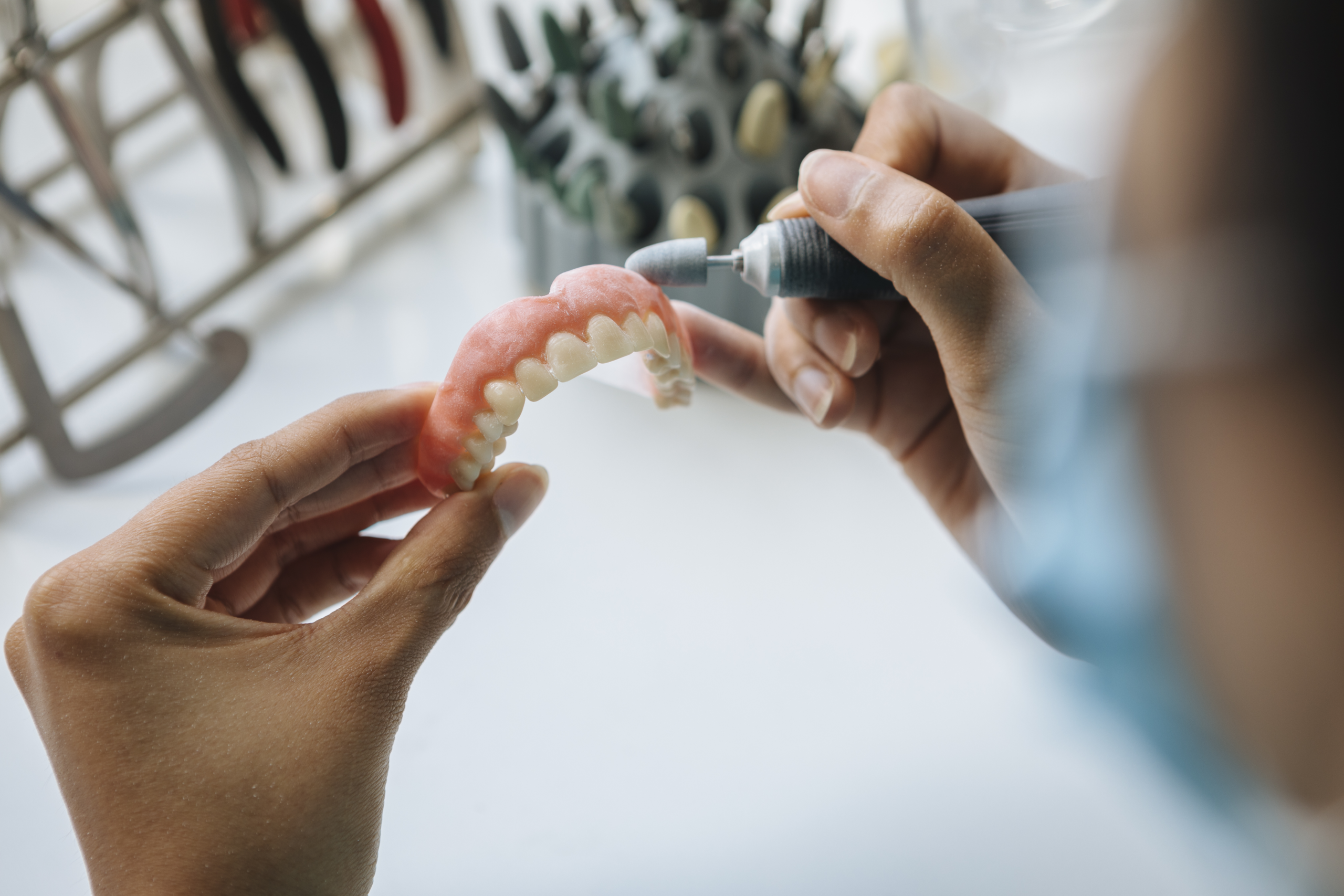
Once healed, we fit the attachments and your denture, adjusted to clip on securely. We show you how to take it in and out and keep it clean.

How it works
How implant dentures work.
From first scan to a secure denture, here is the journey.
Step 01We plan and assess
We check your gums, jaw and any existing denture, and scan to plan where the implants will go, usually two to four to hold the denture firmly.
Step 02We place the implants
We place the small number of implants needed under local anaesthetic. It is a straightforward procedure, and sedation is available if you would prefer.
Step 03It heals, you wear a denture
The implants are left to fuse with the bone over a few months. In the meantime you are not left without teeth, we make sure of that.
Step 04We fit your new denture
Once healed, we fit the attachments and your denture, adjusted to clip on securely. We show you how to take it in and out and keep it clean.

A secure denture
Stop your denture
slipping.
Book an assessment and we will see whether implant-retained dentures are right for you, and give you a clear plan and quote.