

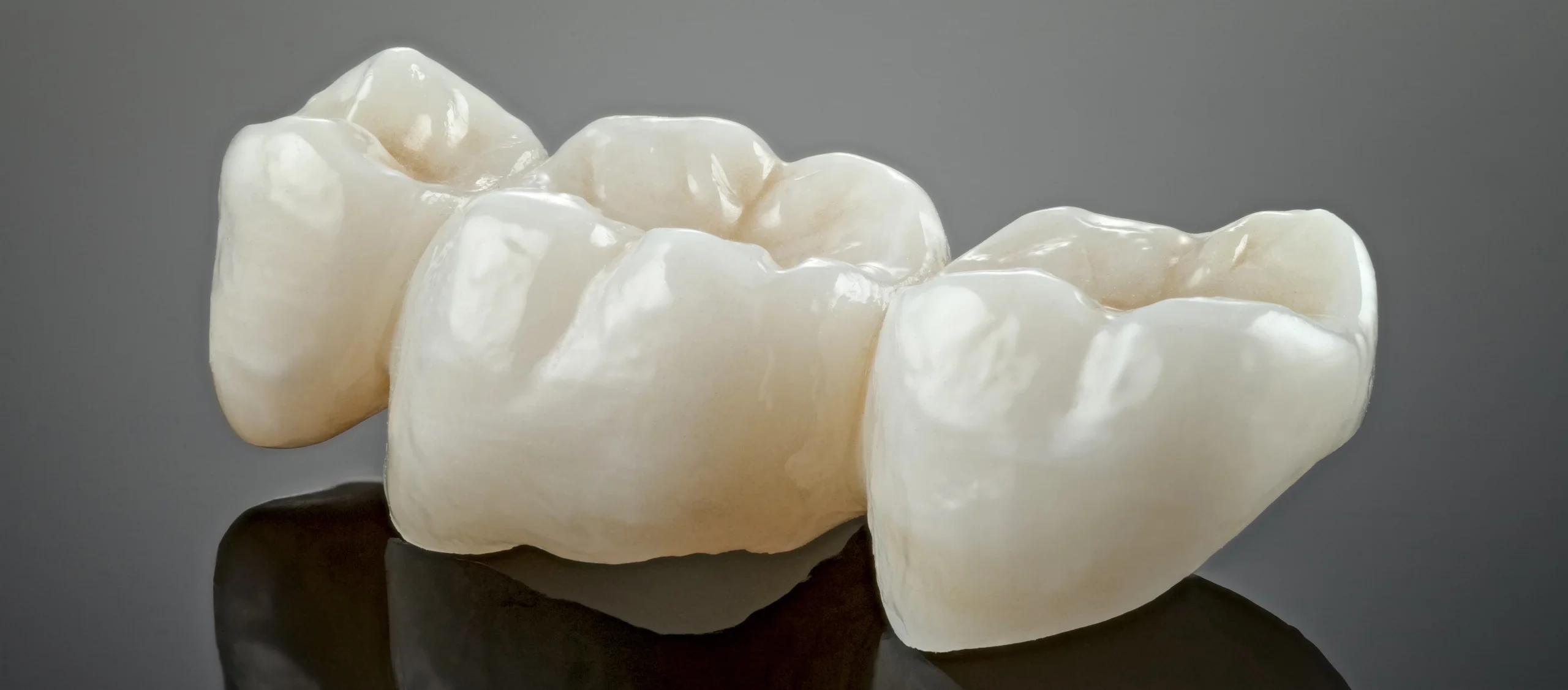
Dental bridges
A missing tooth,
replaced.
A bridge fills the space left by one or more missing teeth. A replacement tooth sits in the gap, held firmly by the teeth on either side, so it stays put and does the daily work of a natural tooth.
-
A fixed replacement for one or more missing teeth, filling the gap so it does not have to be left open.
-
A custom-made restoration, anchored to the natural teeth or crowns on either side of the space.
-
A set-in-place option with nothing to take out, letting you bite, chew and smile with confidence.
Traditional, cantilever or bonded, we make the right kind of bridge for the gap and the teeth around it.
Traditional — anchored on both sides
Cantilever — supported on one side
Bonded — a minimal-preparation option

Why it matters
More than a
gap filled.
Leaving a gap can do more harm than it first seems. A bridge fills the space, protects the teeth around it, and gives you back a full, confident smile.

Fixed in place, and made to suit you.
Restores your bite
Filling the gap means you can chew evenly again, rather than favouring one side. Your bite is balanced, and eating the foods you enjoy becomes easy once more.
Stops teeth drifting
When a gap is left open, the teeth around it can slowly tilt or move into the space. A bridge holds everything in position, keeping your bite aligned and stable.
Looks like your own teeth
We match the shape and shade of the replacement tooth to your surrounding teeth, so the bridge blends in and most people would never know a tooth had been missing.
Fixed and fuss-free
A bridge stays put, with nothing to take in and out. You care for it much like your natural teeth, and with good habits it is designed to last many years.
How it works
How a bridge is fitted.
From first assessment to a finished, natural-looking smile, here is the journey.
We assess the gap
We check the space and the teeth on either side, take any x-rays needed, then talk through whether a bridge is the right answer and which type would suit you best.
We prepare and take a mould
We gently prepare the supporting teeth so the bridge will fit, then take a precise mould. You leave with a temporary bridge while the final one is made.
The lab makes your bridge
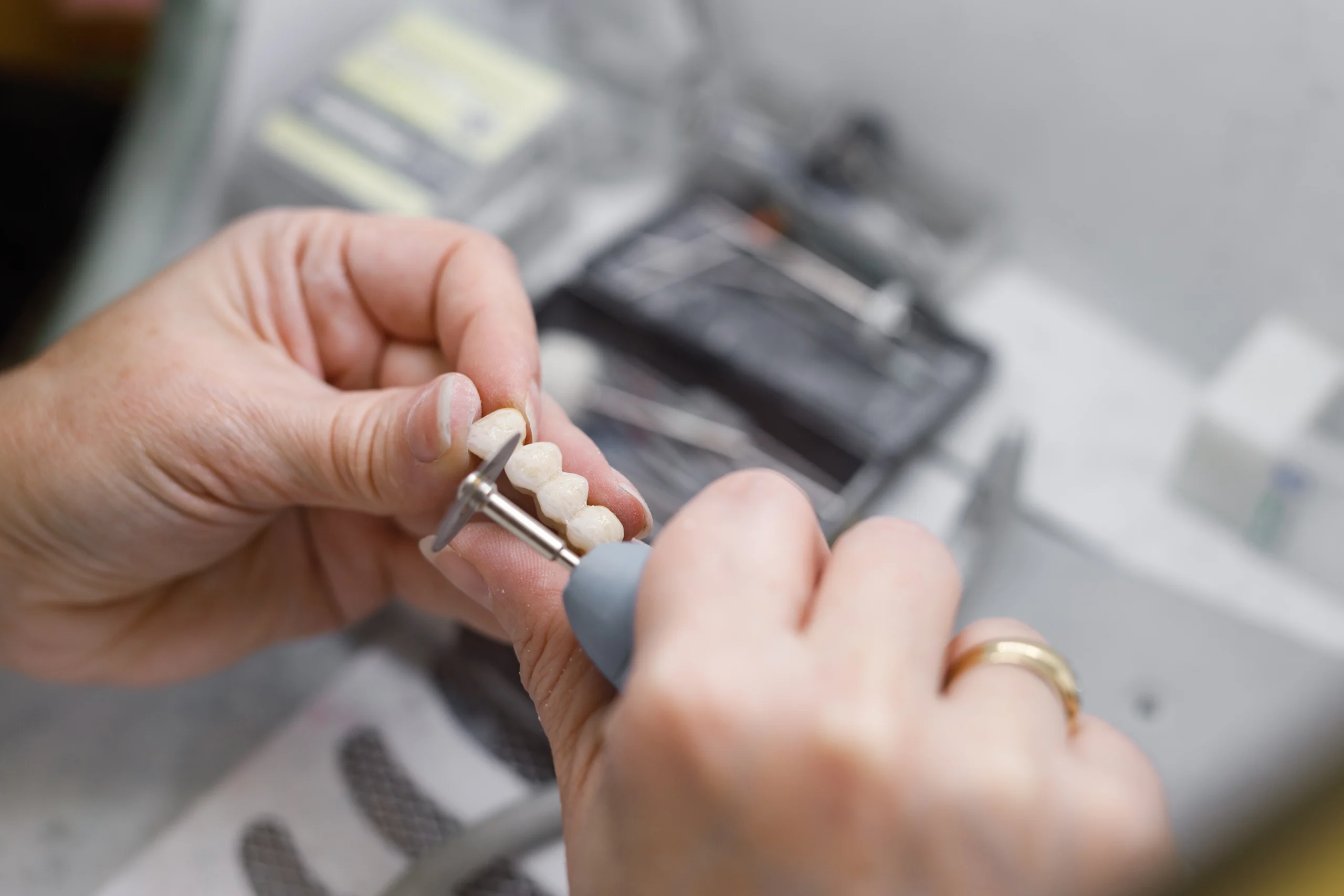
A skilled technician crafts your bridge to the exact shape and shade we have matched, so it fills the gap and blends with the teeth around it.
We fit and bond it
We check the fit, colour and bite, make any small adjustments, then bond the bridge firmly in place. You leave with a complete smile, restored to full use.



How it works
How a bridge is fitted.
From first assessment to a finished, natural-looking smile, here is the journey.
Step 01We assess the gap
We check the space and the teeth on either side, take any x-rays needed, then talk through whether a bridge is the right answer and which type would suit you best.
Step 02We prepare and take a mould
We gently prepare the supporting teeth so the bridge will fit, then take a precise mould. You leave with a temporary bridge while the final one is made.
Step 03The lab makes your bridge
A skilled technician crafts your bridge to the exact shape and shade we have matched, so it fills the gap and blends with the teeth around it.
Step 04We fit and bond it
We check the fit, colour and bite, make any small adjustments, then bond the bridge firmly in place. You leave with a complete smile, restored to full use.


Your smile, complete
Close the gap
for good.
Book an assessment and we will check the space and the teeth around it, talk through the right kind of bridge, and give you a clear plan and quote before anything begins.